When I was a child, I read all the time, I would read between lessons, after school, on the weekends. When I got a phone, reading fell out of my life and no matter how much I tried, it never became the habit I wanted it to be. Doomscrolling and work took over my life, and I have noticeably felt the damage that did to my mental health and attention span.
As part of my perpetually ill-fated resolutions this year, I have begun reading more consistently again! I bought a couple of books for cheap at charity shops, fell down a Julian Symons rabbit hole, and have been thoroughly enjoying it. Below is a tailored list of books I’ve read so far (subject to update) that I would recommend, along with a reason why, and a little plot summary.
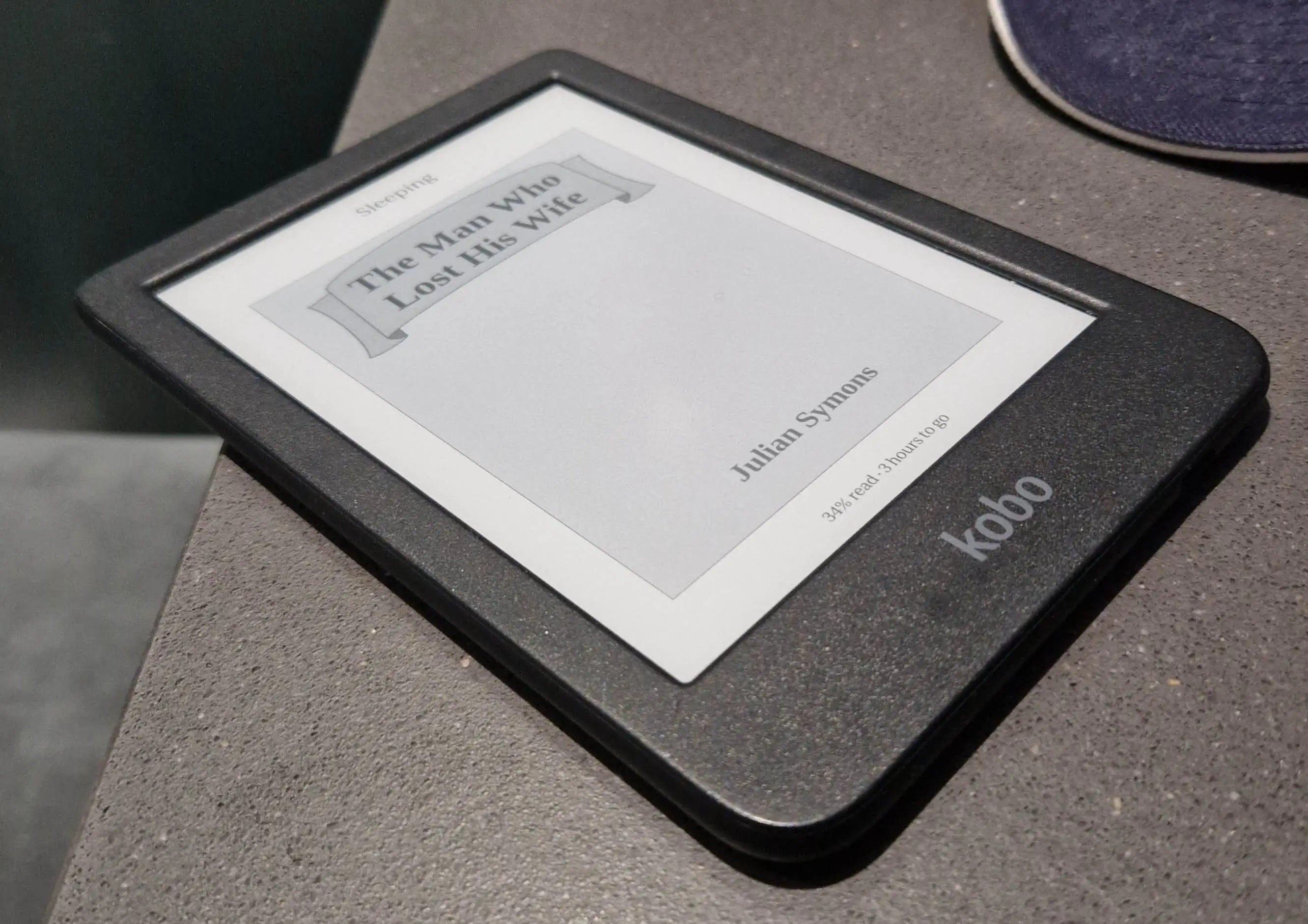 My trusty Kobo e-reader, which I use to read most of the books on this list.
The Man Who Killed Himself - Julian Symons
I would credit this as the book that got me back into reading, after picking it up for £1 in a charity shop. The main thing that impressed me most about this book is I genuinely did not know what was going to happen all the way up until the end. To me that’s Agatha Christie levels of suspense, and Symons does that without making you want to put down the book out of frustration or boredom.
We follow Arthur Brownjohn, an aptly-named meek man who lives in fear of his wife. To cope, he builds a secret second life, under the alter ego ‘Major Easonby Mellon’. You find out early on that Mellon has a wife himself, an unsuspecting woman who believes her husband is secretly a spy. He can’t keep this up for long - and you are constantly left guessing how his life continues to unravel.
The Hitchhiker’s Guide to the Galaxy - Douglas Adams
I can’t believe I made it to the age of twenty without ever having read Douglas Adams. I can say that I would recommend this book to any Brit who enjoys dry humour and a light read. After Julian Symons it’s a refreshing pick-me-up and a book that is very easy to read.
Another Arthur leads, coincidentally, and Adams’ Arthur Dent is just as mild-mannered as Symons’ Brownjohn. His house is about to be demolished - and so, as it turns out, is Earth. He is whisked from planetary destruction by his friend Ford, who turns out to be an extra-terrestrial, and taken on a wild adventure across space and time.
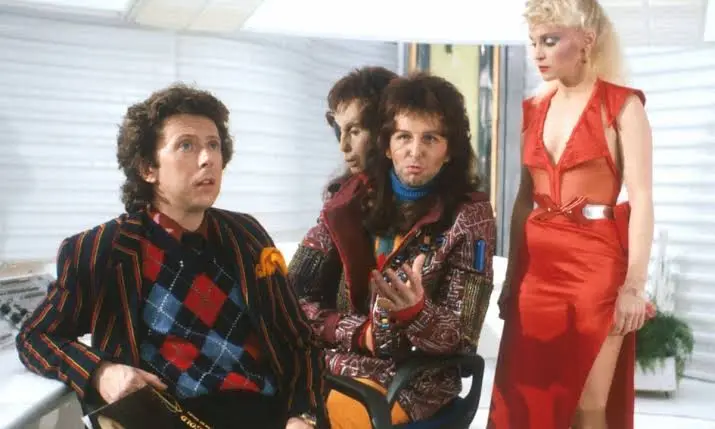 The original Hitchhiker’s TV Show
The Dallergut Dream Department Store - Miye Lee
This was a funky experiment in magic realism, but in a much more accessible way than Gabriel García Márquez’s One Hundred Years of Solitude. If you allow yourself to suspend disbelief for the duration of this book (and its sequel Return to the Dallergut Dream Department Store) I think you are in for a treat.
It takes place in a town set in the collective subconscious, and we follow Penny, a new employee at a department store which sells only dreams - nightmares, daydreams, visions, you name it. It’s light, fun, and gives you something to think about.
Life, The Universe and Everything - Douglas Adams
Once you’ve read Hitchhiker’s Guide and enjoyed it, it’s worth getting through The Restaurant at the End of the Universe so you can get to this one.
Life, The Universe and Everything was an absolutely excellent third book in the series, the strongest so far in my view. It picks up the slack where the second book dropped it a little, and keeps you on your toes with a refreshing amount of plot and world-building.
By this point, Arthur has been stuck on prehistoric Earth for ages, until Ford appears, drags him through a rip in space-time, and lands in the middle of a cricket match at Lord’s, two days before Earth’s original destruction. This balloons into a history lesson of a foundational war of the universe, and some light stories about evolution.
You may wonder why I haven’t recommended The Restaurant - I thought it was okay, but weaker than its two siblings and a little filled with airless plot. It is nonetheless an enjoyable book, and worth reading to complete the series.
The Progress of a Crime - Julian Symons
I read this right after The Man Who Killed Himself. It is a little drier and more biting, with a clearer edge of social commentary. Nevertheless, the writing is engaging.
If you’ve enjoyed the first two, and you want another Julian Symons book, I would recommend The End of Solomon Grundy. It’s not quite as good, which is why I haven’t given it a standalone recommendation, but it still lives up to Symons’ standards.
The Invisible Man - HG Wells
I’d heard this was a classic, and I did feel it lived up to its hype. It has the short length that was typical of books of its era, but manages to pack a cynical and atmospheric writing style into relatively concise chapters.
Before the Coffee Gets Cold - Toshikazu Kawaguchi
More a collection of short stories than a novel, this made me cry on a car journey. It makes you smile, cry, think about the past and the future, and fall into a nostalgic trap of wondering about life’s transience.
The premise alone should sell you - a Tokyo cafe where you can travel back in time to speak to someone one last time - but under a very strict set of rules. You can’t leave your seat, nothing you do will change the present, and you have to make it back before your coffee gets cold. Each of the four visitors has someone unique they never got to finish a conversation with. It’s a hard book to read if you have any relation to the four scenarios - some of them hit quite close to home.
I Who Have Never Known Men - Jacqueline Harpman
A book which has a lot going on thematically, touching on anti-patriarchal social structure, the concept of non-verbal communication, and evolutionary re-building. It was a marginally stressful read, in the sense I was constantly anticipating things to happen, but those things never quite came, and I was never quite put at ease. I would recommend it if you are interested in being challenged and forced to think.
The Wonderful Story of Henry Sugar - Roald Dahl
While this is again a collection of short stories and not a novel, it deserves an honourable mention simply because of how whimsical it is. I read this first a long long time ago, and re-read it recently and was hit with nostalgia.
My favourite is The Wonderful Story of Henry Sugar, the titular tale and longest piece. Henry Sugar, a gambling addict, reads about a circus performer who is trained to see without his eyes. Sugar immediately thinks of cheating in casinos, and spends three years practising meditation until he can do it too. He promptly cleans up at every local casino, but soon finds it boring, even throwing cash off his balcony on a whim. He decides to use his powers to fund orphanages worldwide, travelling in disguise with an accountant and a makeup artist.
The Hitch-Hiker is my second favourite. It tells the tale of a writer who picks up a hitchhiker with particularly long and slim fingers. They get stopped for speeding, and the hitchhiker turns out to be a pickpocket, has already swiped the narrator’s wallet and watch - but somehow manages to get the pair of them out of a speeding ticket.
The Mildenhall Treasure is my third recommendation - it is a true story of the ploughman Gordon Butcher who unearths a hoard of Roman silver. His boss tricks him into thinking it’s worthless, and keeps it for himself. An archaeologist eventually recognises the silver for the treasure trove that it was!
I have just discovered while writing this that Wes Anderson has made adaptations of two of these short stories, Henry Sugar and The Swan. I am adding those to my watchlist immediately.
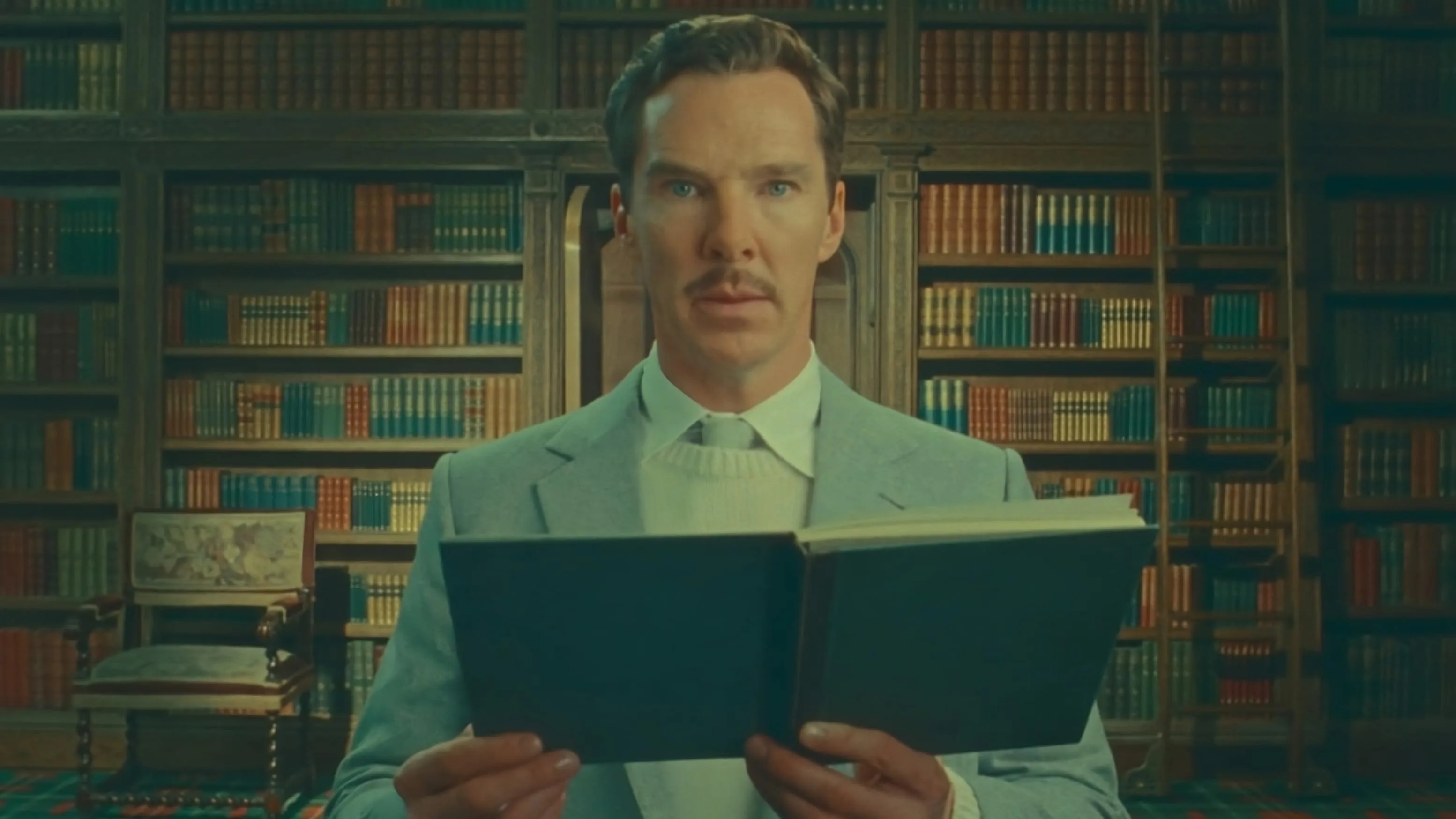 Benedict Cumberbatch as Henry Sugar
That’s all, folks!
My attention span has still not reverted, and I still find myself doomscrolling frequently. But I’m never going to be cured, it’s just nice to have a hobby which isn’t social media.
I hope this list is useful, and if it causes just one person out there to pick up a book even for a little while, it has served its purpose. Reading is a joy to share with others.
This list may update until December 2026, and if I enjoy writing it, may be followed by a sequel!
Small self-promotion - I use my website headandheart.app to track my books - see if you like it too!