One morning, we were eating pastries on a balcony looking out on a Mediterranean bay. Two days later, we were standing on a windswept mountain peak at 2300m, looking over the jagged alpine landscape.
That’s Montenegro - it may be smaller than Connecticut and less populous than Glasgow, but it packs incredible variety into a country you can cross in a few hours, and all on a Balkan budget. If you’re only visiting some of these places, our three-week trip had four main parts, which you can jump to with these links:
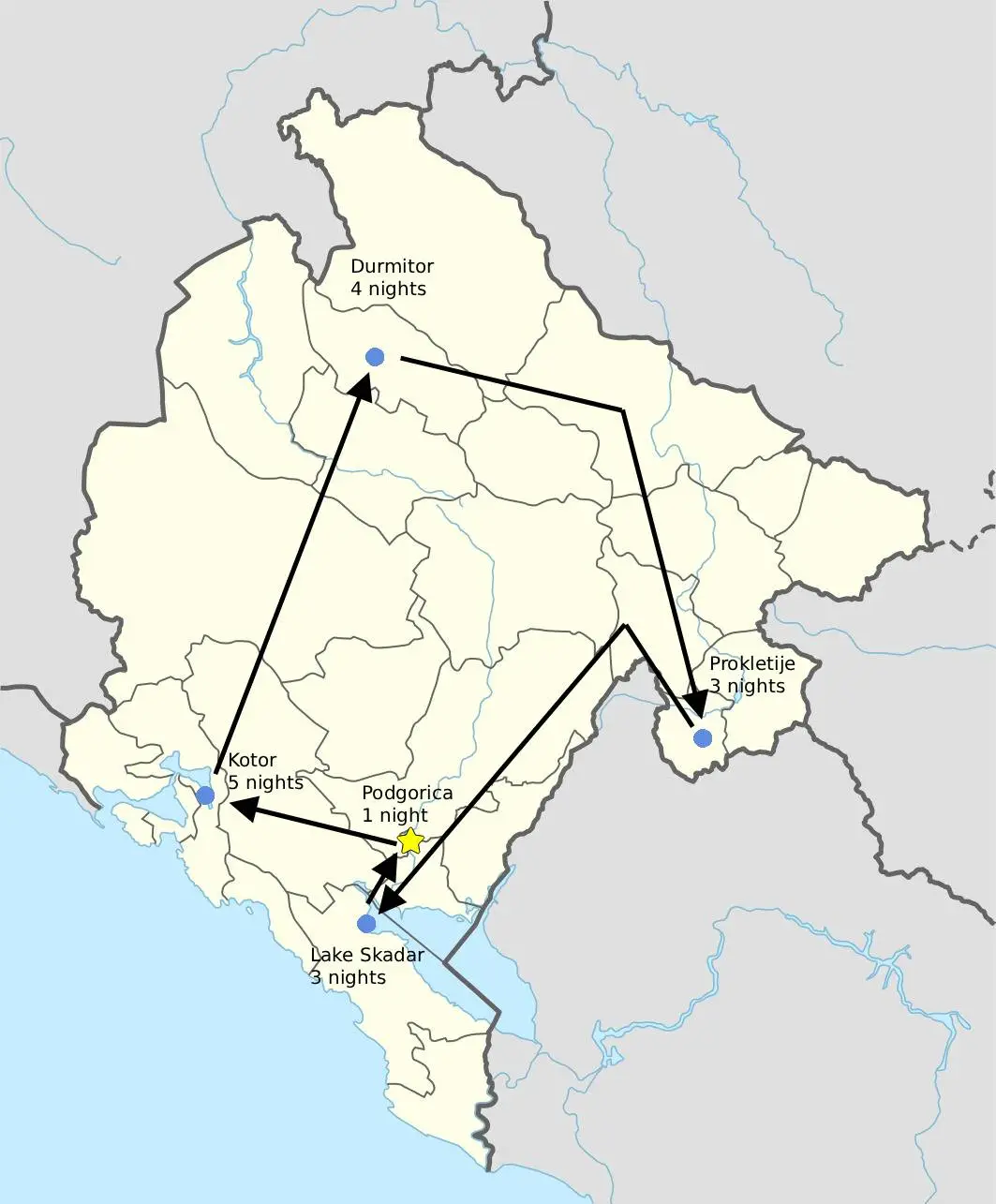 Our rough route
At the bottom of this page, there’s a Know Before You Go that you can refer back to for a packing list and key tips!
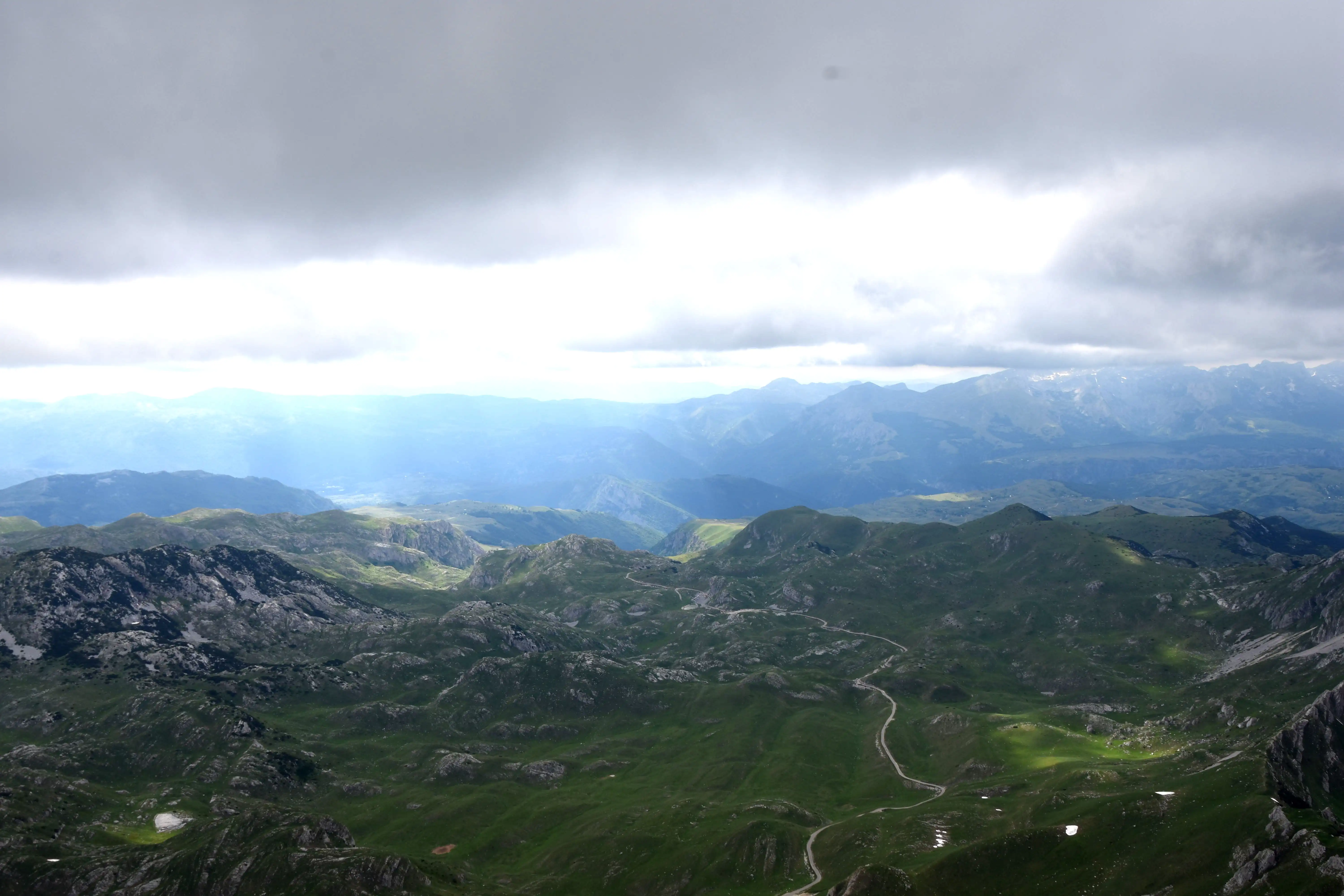
The view from the top of Mount Prutas
The Bay of Kotor
We flew into Podgorica and picked up our rental car from local car hire company Terrae-Car, who we’d happily recommend. After spending a night in a nearby airport hotel, we woke up and drove north-west across the coast to the Bay of Kotor, where we checked into our AirBnB in the western town of Muo!
On the way, we passed Sveti Stefan, famous for its peninsula island. While the island is reserved for guests of the luxury hotel, you can park at the higher St Sava Church, where the view (and the sea breeze!) is better.
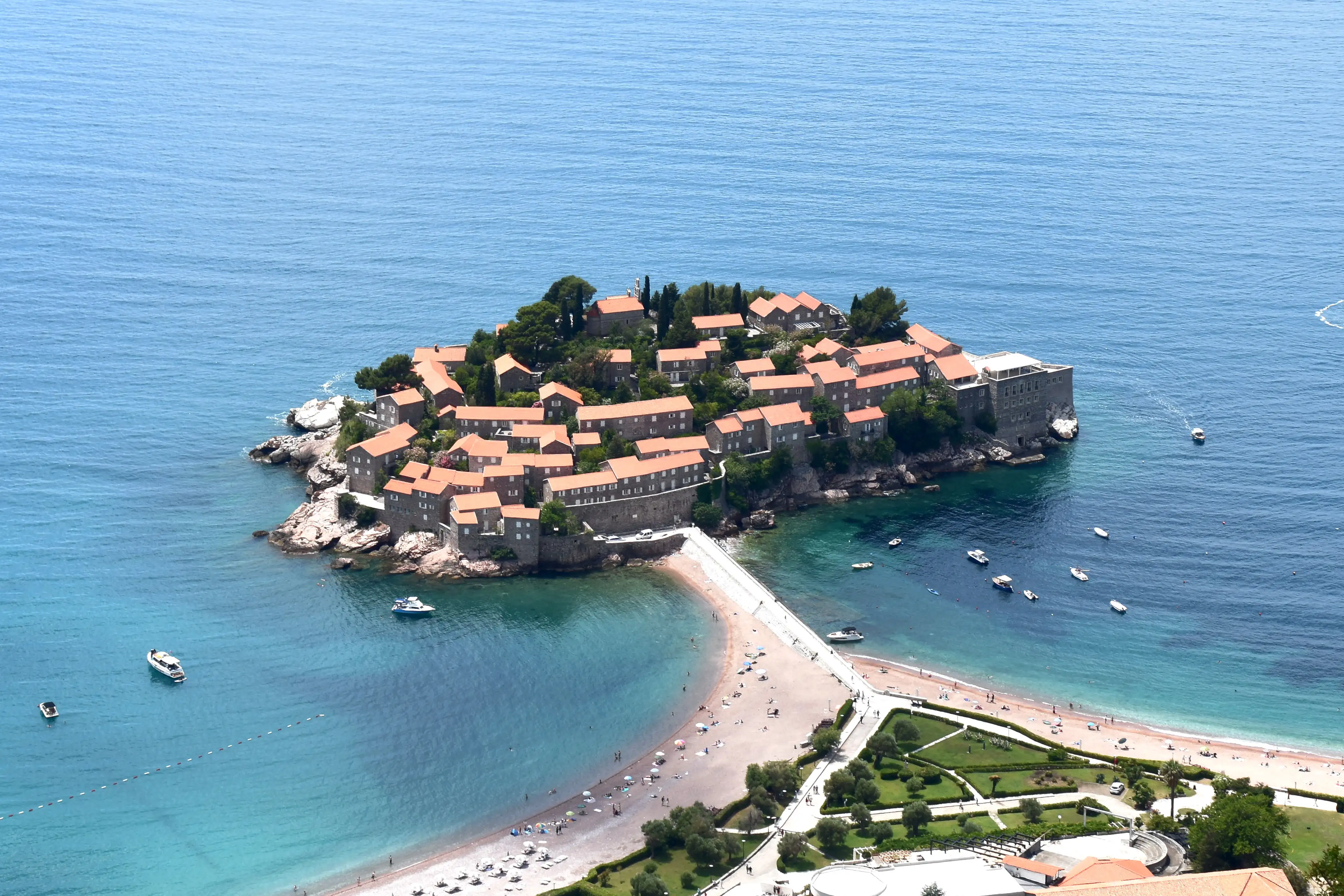
Sveti Stefan from St Sava Church
Franz Joseph Stairs
This historic trail zigzags its way up the mountain towards Fort Vrmac, an entirely abandoned Austro-Hungarian fortress. Be prepared for a dramatic change in climate - the sweltering sun of the coast drops off and you are rewarded with a cool sea breeze at the top of the ridge, which acts as a wind tunnel.
You will want to climb this in the morning - this way, you’ll arrive at the peak at about midday, in time to explore the fort. ‘Explore’ is truly the right word - the fort is completely abandoned, no ticket booths or safety rails, which means rusty nails, broken glass, and sharp rocks lying around everywhere. Walking through the dark, empty halls gives you a sense of what an Austro-Hungarian soldier stationed here in the 1800s might have felt.
The ridge also houses a local farm owned by a man called Goran, who you’ll likely discover as you’re greeted by his chickens, pigs, goats, and some farm dogs! While we didn’t go in, he sells eggs, cheese, and milk, so if you want to support local Montenegrin farmers, it’s a stunning location to do so.
We tracked around 25,000 steps this day, a solid start to our hiking journey!
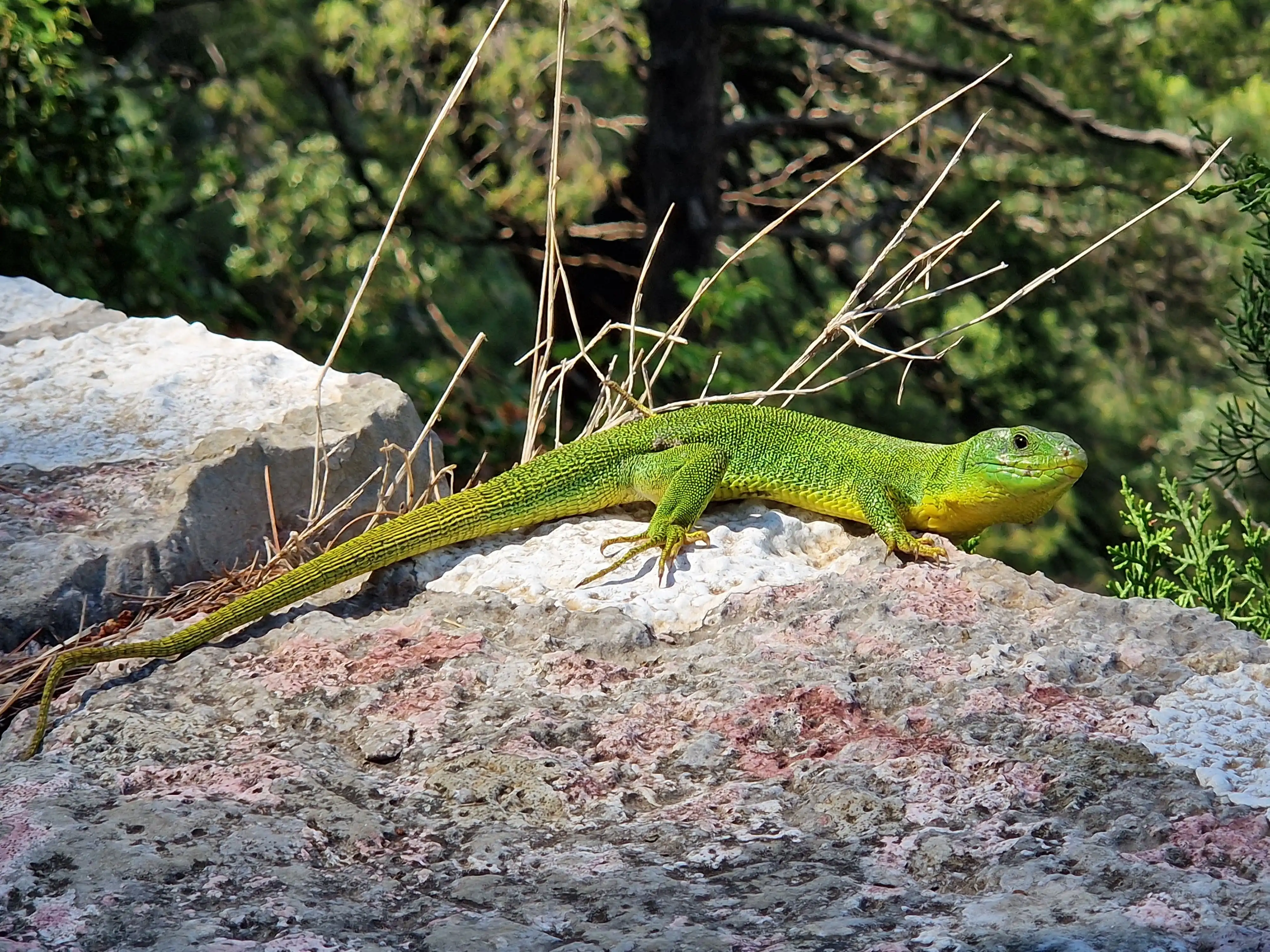
We were joined by a slithery friend halfway through
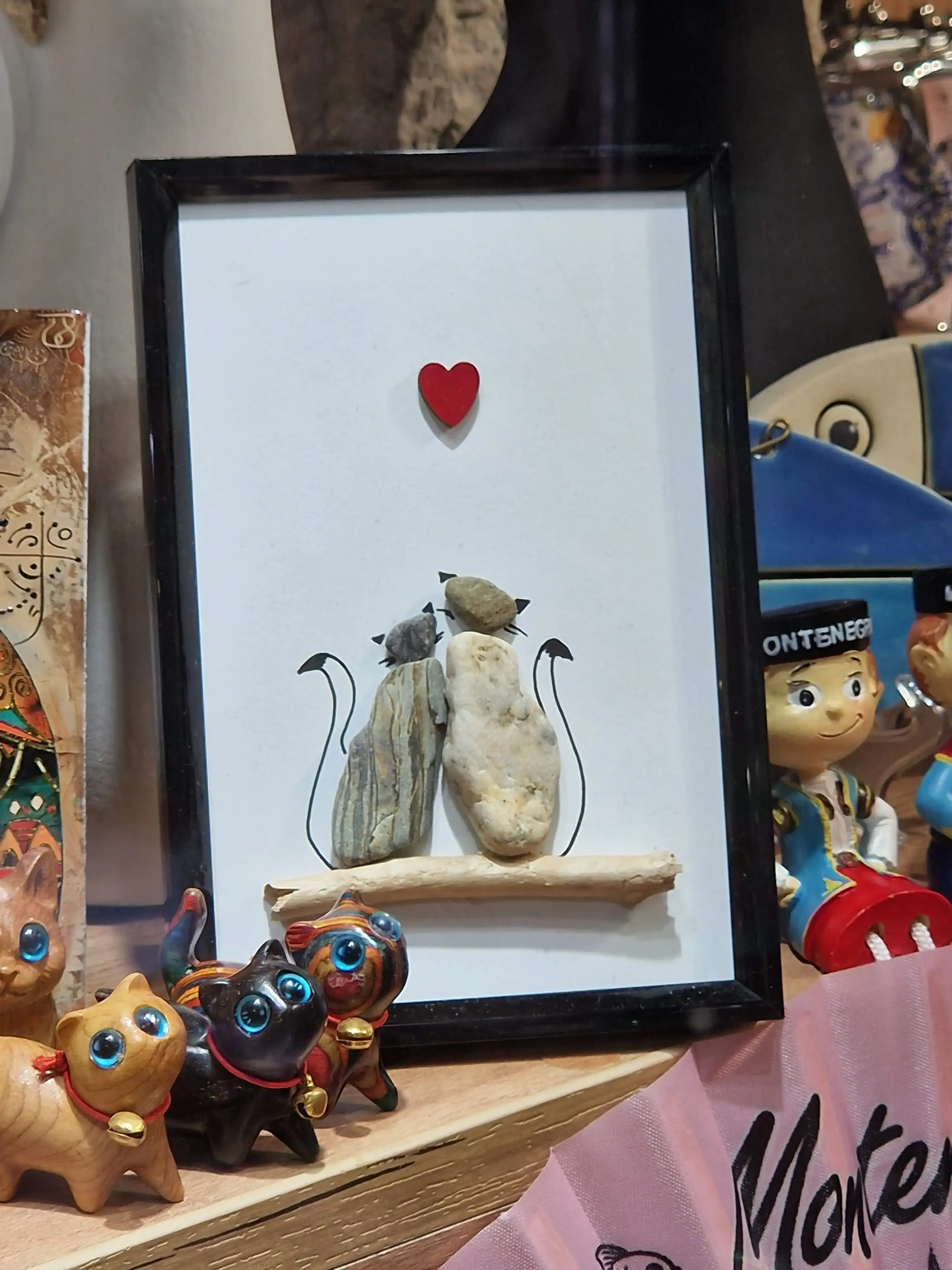
Kotor Cat Museum
If you are looking for a break in this hiking holiday to buy some souvenirs, Kotor Old Town is the place. It’s probably the most touristy place we’ll visit on this trip - but it’s still worth a visit. We initially thought Kotor felt a bit unfinished, but when you enter the gate into the old town you suddenly get hit by the Western European style old town vibes, old churches, cobbled streets, ice cream stores, and dozens of identical souvenir shops.
The highlight of the old town in my opinion was the Cat Museum - a strange theme throughout the whole town, due to the large numbers of stray cats. The museum takes an entry fee of €1, in cash only, which is negligible and goes towards the upkeep of the local stray cats. For an extra €2.50, you can buy a certificate to sign up your cat to be officially part of the Kotor Cat Society! It’s packed with old stamps, advertisements, cartoon strips, and other cat media throughout history.
We walked so much, we really don’t know the meaning of ‘rest’ day.
Ladder of Kotor
If you are hiking the Ladder of Kotor, try to start early - the middle of the day gets boiling hot and the sun is unforgiving. Unlike the Franz Joseph stairs, the Ladder doesn’t provide any shade until at least three-quarters of the way up, so it’s worth bringing sun hats, suncream and lots of bottles of water. If you want a hike that doubles as a relationship test, go for this one - I’m proud to say we made it out of this one even stronger than before.
The switchbacks seem endless, but the views of the bay opening up beneath you as you climb are well worth the burning calves.
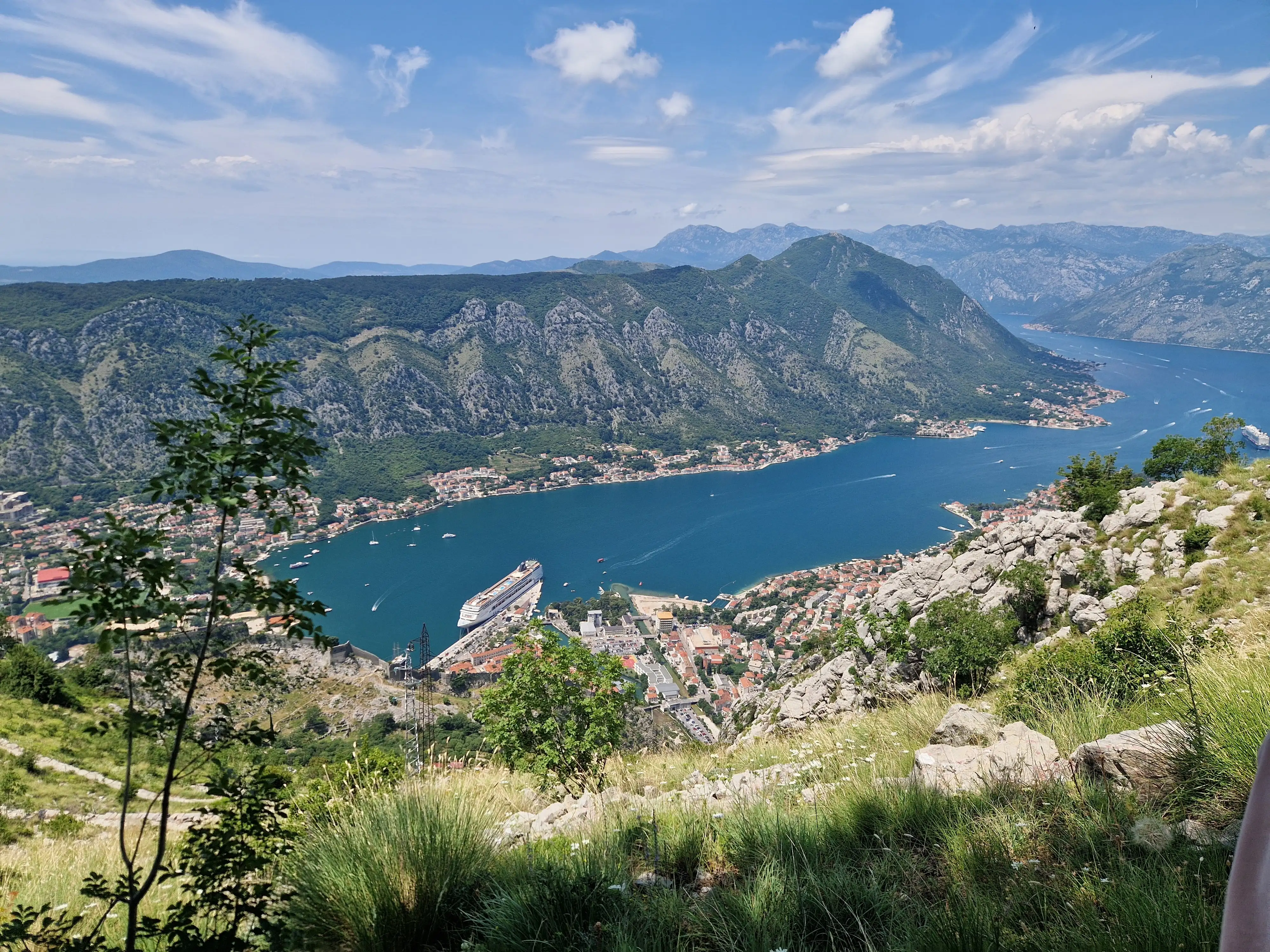
The Bay from the top of the Ladder
Pro tip - you don’t need to climb to the absolute summit - just before the very top there is a perfect, shady tree. We packed some poppy seed bread from Kordic Bakery and Pastry Shop (for only a euro per slice!), and had a cool and shaded lunch looking out at the water.
Boat Tours, Perast, and the Cable Car
For our last day in Kotor, the two main hikes exhausted, we decided to lean fully into tourism.
We booked a boat tour via GetYourGuide, but you could just as easily find one on the day - there are literally dozens of companies waterside shouting ‘boat tour? boat tour’ at you constantly. We opted for the Lady of the Rocks and Perast tour, so our speedboat drove around the artificial Lady of the Rocks island with a church on it, giving us a panoramic view of the old, more picturesque town of Perast, before dropping us off in Perast for an hour of exploration.
Some boat tours offer to let you explore the church on the island - in my view, it’s not worth it. You have to pay to enter, cover up if you’re wearing shorts or a t-shirt, and it’s not that impressive inside - the best view is from the water.
If you want to take the Kotor Cable Car, I’d recommend getting to the bottom around 5pm, so you can experience sunset on the peak. The cable car takes you to the heights of Mount Lovcen, at 1,348m above the sea-level base station.
The wind chill is intense at the top, so bring a jumper or a coat, even if it’s sweltering in Kotor - I made this mistake and was shivering as the sun set.
We rode the Alpine Coaster for €12 each, and while a very touristy thing to do, evidenced by the half-hour long queue, the views you see of the sea below you as the wind blows in your hair are honestly worth it.
After our coaster ride, we shared a four-cheese pizza and drinks at Forza Kuk, the panoramic balcony restaurant which looks over the entire Bay of Boka below you. We also got a frozen banana at Bob’s Frozen Bananas, a ridiculous and overpriced delicacy which was well worth the price for the whimsical experience of running to the cable car queue brandishing a chocolate-covered banana on a stick.
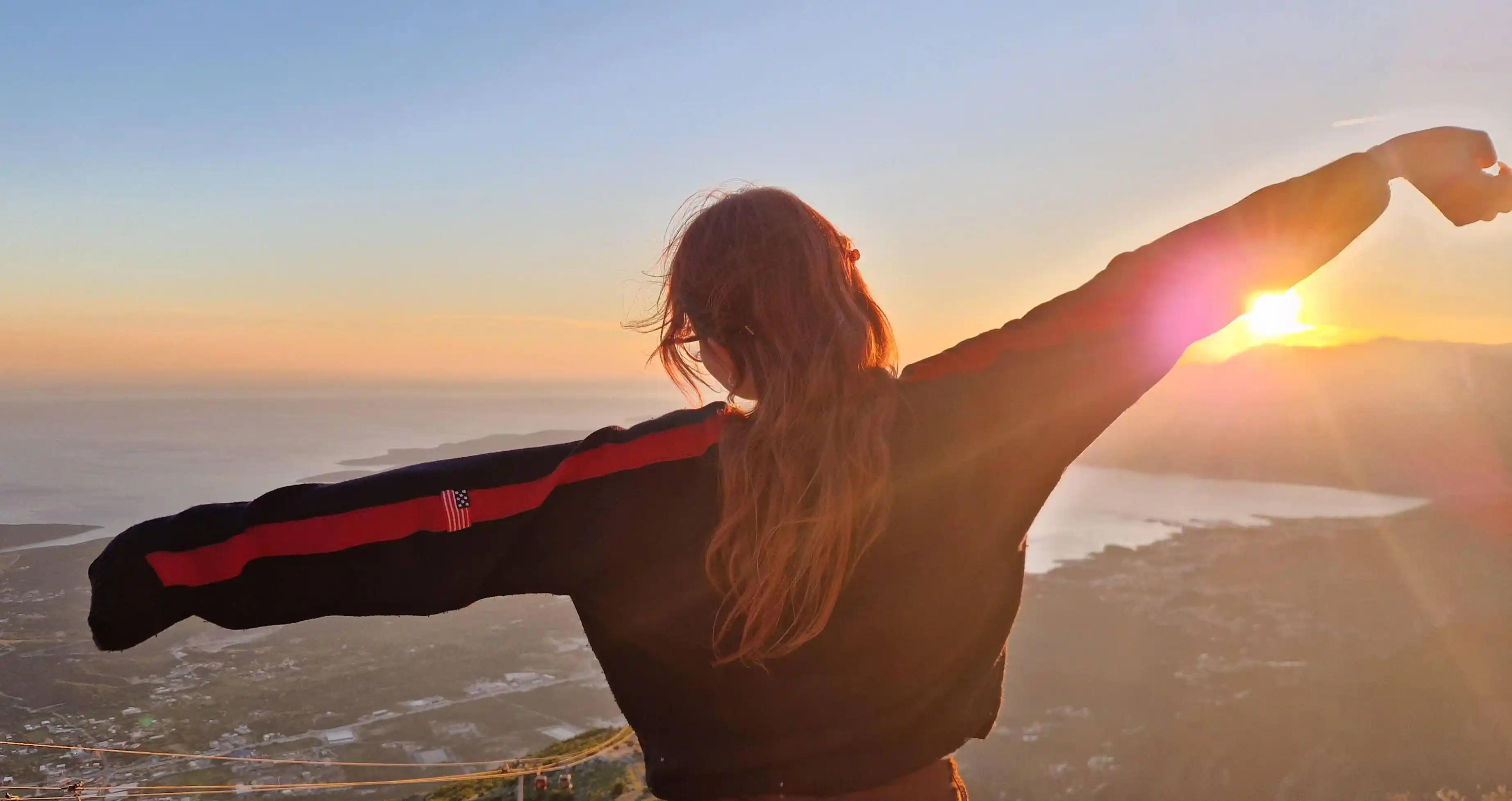
The views from the Kotor Cable Car are well worth the trip
Durmitor National Park
Leaving the Bay of Kotor behind, we packed up our Terrae-Car and headed north. If you are following this route, I highly recommend stopping at a VOLI or IDEA supermarket on the way to stock up on snacks and food for dinners when you get into more remote areas.
Getting petrol in Montenegro may throw you off if you’re not used to full-service stations! You can just pull up to a pump and say ‘Puno, molim’ for a full tank and the attendant will handle everything for you.
The drive north from Kotor is an adventure in itself. With the heat of the coast fading and Six the musical blasting in the car, the rolling hills of the Mediterranean were slowly replaced with rugged, dramatic alpine peaks.
Quick heads-up as you unpack - while the heat was gone, bugs are ever-present in Durmitor - a good bug spray is vital, and most houses will have bug nets over large windows.
Black Lake
Black Lake is an entry-level hike - it’s more of a walk, around a 5km round trip around Black Lake (Crno Jezero) in the national park.
The entry fee to enter the Durmitor National Park is €5, paid in cash at the booths by car parks at the entrances to the park - but I would strongly recommend buying the Annual Membership to all Montenegro’s national parks for €13.50, which you can do online here. If you’re going into any of the national parks (Durmitor, Lovcen, Prokletije, and Skadar Lake all feature on this trip) more than twice it will save you dozens of euros. Buying this pass gives you a QR code on your phone you can show to the guards for them to scan.
The lake itself is almost split into two parts by peninsulas, and features some incredible views with the towering Mount Međed providing a backdrop to the rocky circular loop.
We went through a packet of trail mix and some sunflower seeds and sat on one of the benches for a while listening to the birds and looking at the small fields of alpine buttercups swaying in the breeze. Despite a lot of people being around and on the path, it still felt remote and quiet enough to contemplate the mountainous scene surrounding us.
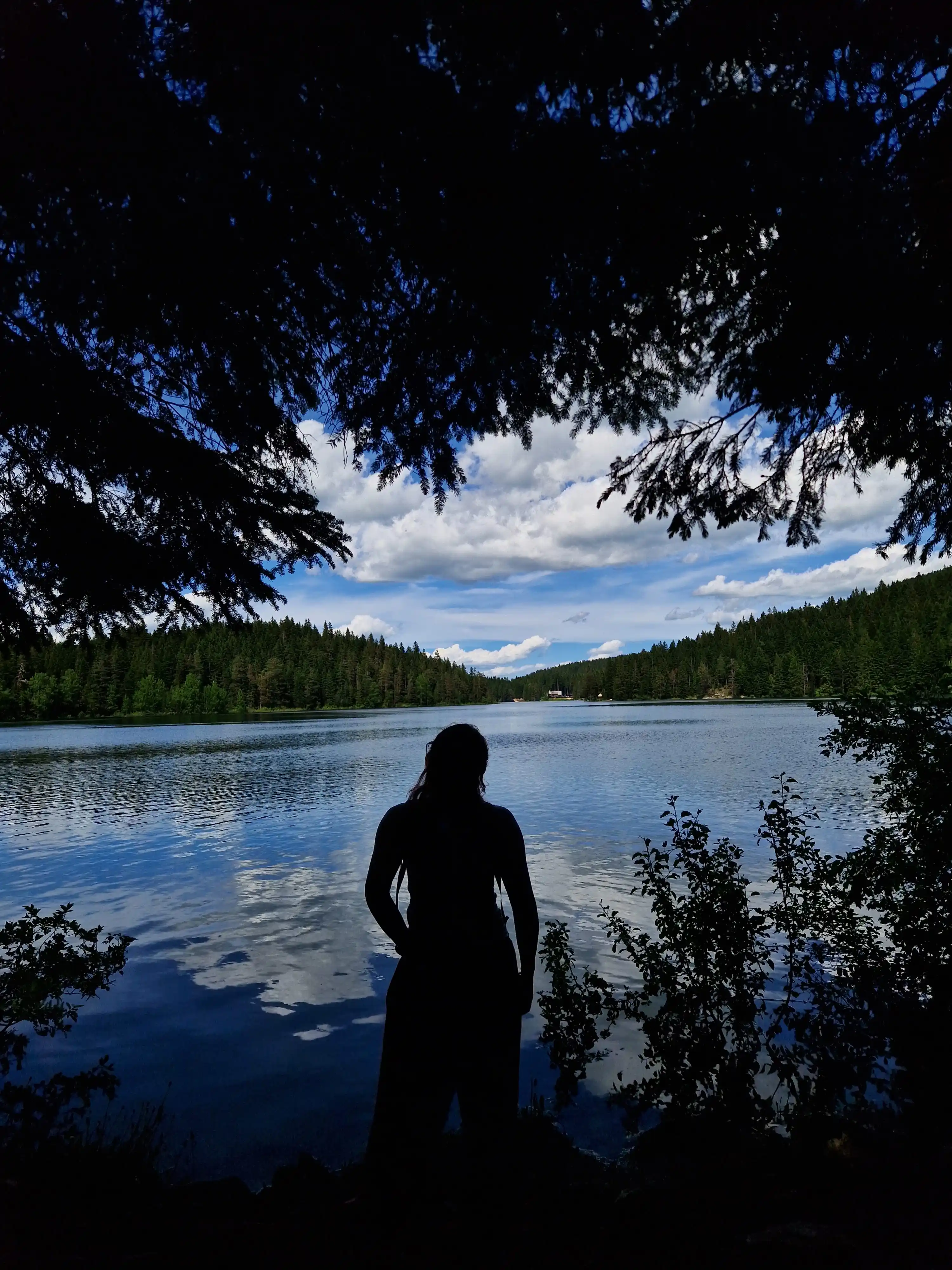
Black Lake, Durmitor National Park
Durmitor Ring and Mount Prutas
If you’re looking for a big day out of driving and hiking, look no further than Mount Prutas, found forty minutes on the 76km Durmitor Ring Road which circles through the Durmitor National Park.
The trail itself is an 8km round-trip, and it took us about 4 hours to complete, 2.5hrs to the top and 1.5hrs down again.
We kicked the day off at 11am from Zabljak, making a pitstop at the local VOLI to get some lunch: traditional flaky pastries (Pita) containing potato and onion (krompiruša), spinach (zeljanica), and cheese (sirnica). They were delicious, and felt absolutely deserved at the peak of the mountain. We also brought 4 litres of water, plus our cameras, suncream, and some trail mix.
We’re driving a Toyota Yaris, which is worth mentioning because the Ring is a narrow road which fits around one and a half cars - you frequently have to pull up on the side or reverse around a corner. A larger SUV would definitely struggle, so go for the smaller cars.
We headed south from Zabljak, and entered the ring counter-clockwise, heading to Sedlo Pass on our maps. We drove through this pass, where there is another parking lot, about 10 more minutes down the road to the Dobri Do Valley (Kamp Sarban) parking lot, where you’ll see several campervans parked in the valley below. We parked here, for free, to start our hike, which starts just off the right of the road, in a little rocky scramble up to the ridge.
While it doesn’t feel it in the valleys, the peak will be windy and chilly - be sure to bring a raincoat and hiking trousers!
The top is absolutely worth the climb - from all sides, you overlook massive drops - the deep, glacial valley containing the Skrcko Lakes, the jutting limestone daggers which are famous for their unusual formation, and most importantly, the grassy hills below where you just spent two hours hiking up.
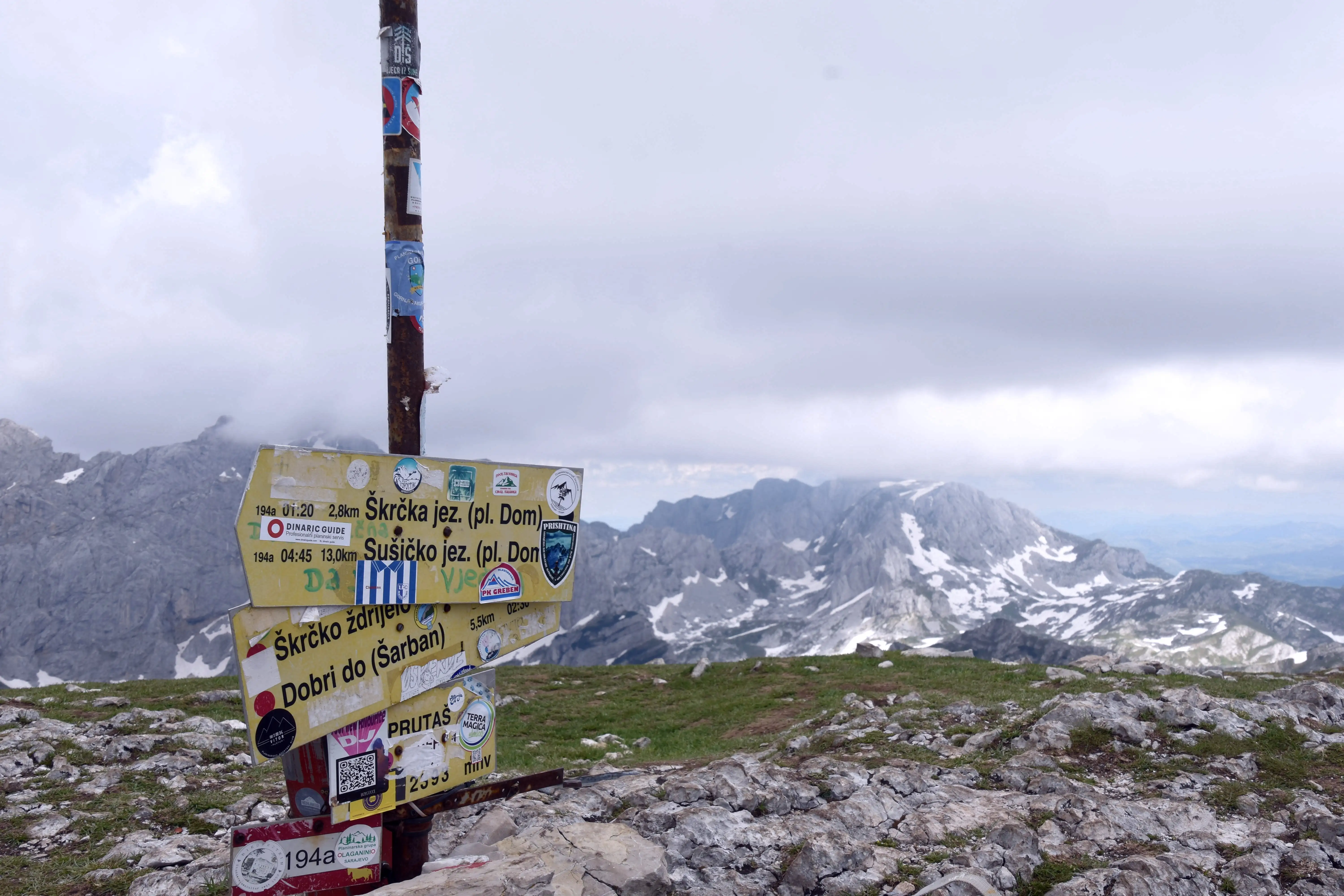
The summit!
The wildlife is sparse, but watch out for mountain goats (Chamois, a goat-antelope) on the trail - they live there, you’re just passing through! Walk around the trail if possible and keep your distance.
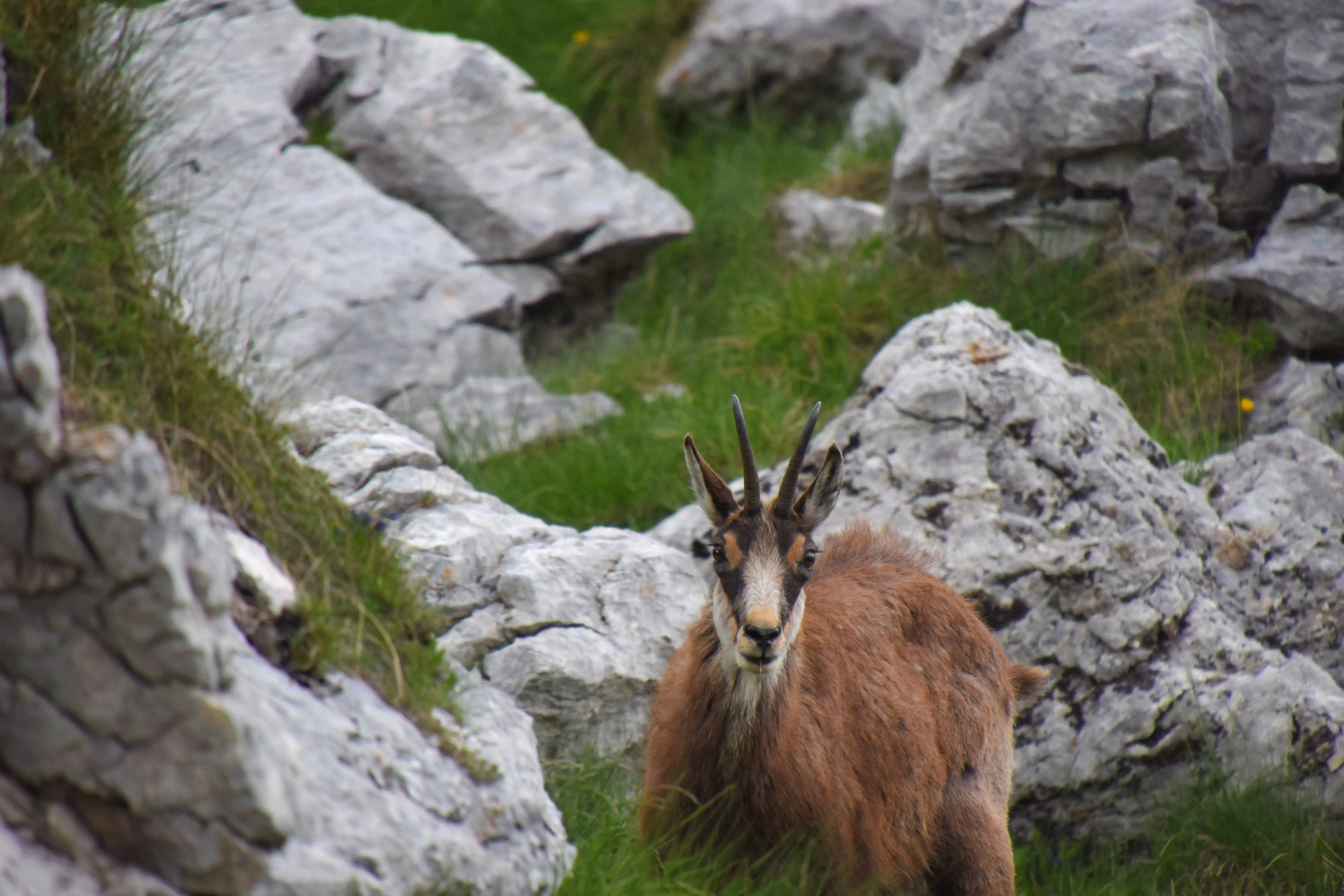
Goat-antelope we saw on our way down
We got back in the car at around 4pm - with still around four hours until sunset, we decided to continue driving the Durmitor Ring. The drive is well worth it if you are a sucker for views - we drove through plateaus, ridges, over the hills as the sun set across fields of buttercups, through dense forests, and down the dramatic Susica Canyon. It took us through several small villages, including the scattered Lice and the farming village of Trsa. After around two and a half hours of driving, we ended up back in Zabljak for dinner.
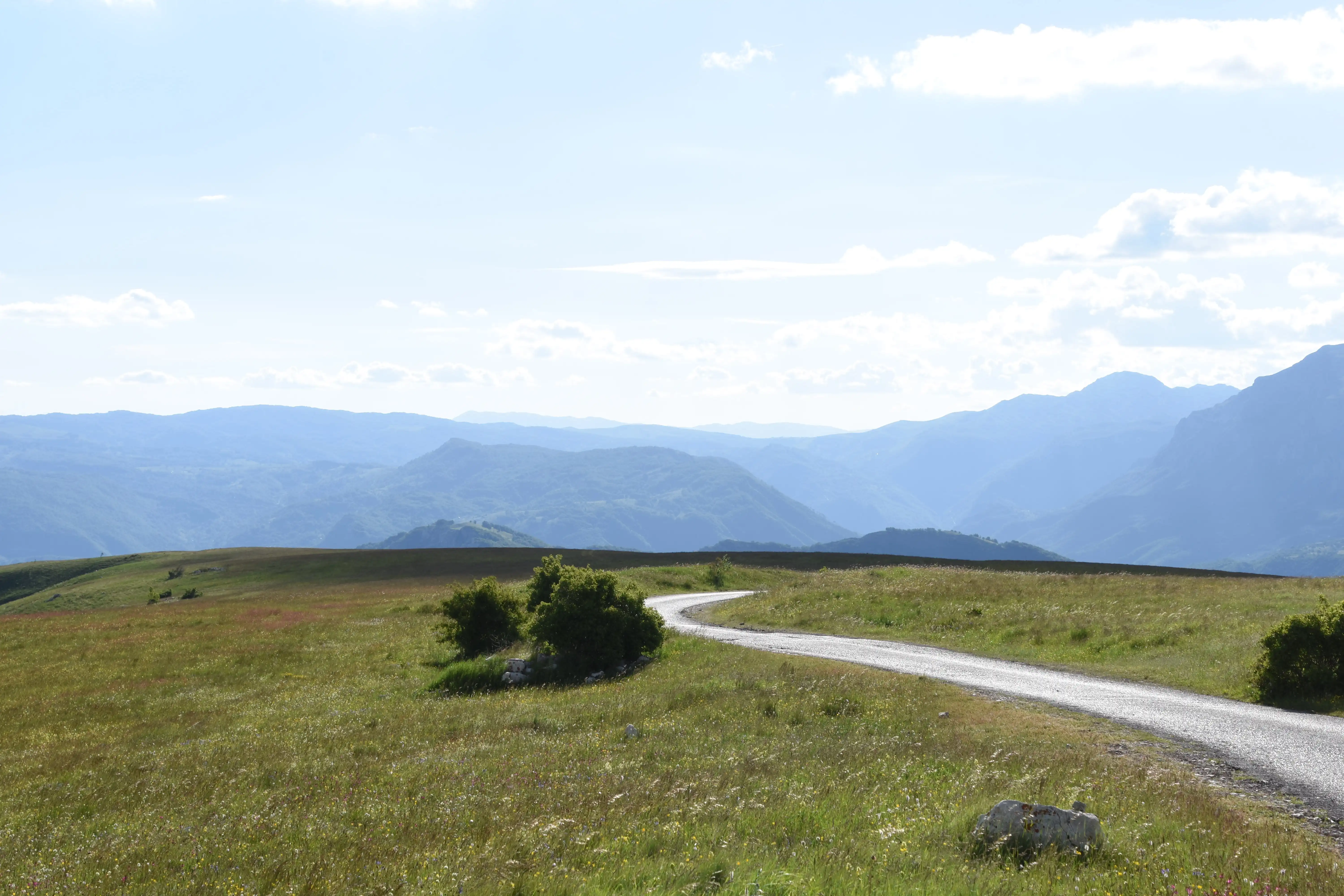
The Durmitor Ring
We spent our last day in Durmitor visiting the Curevac Viewpoint, which was a twenty-minute drive from Zabljak and offered stunning views of the canyon below. We avoided visiting Tara Bridge, as it was under construction at the time and not accessible via car. If the construction has finished when you’re reading (around 2027) then I would recommend a visit, as it’s only another 30 minutes and is an incredible feat of architecture.
Prokletije National Park
We packed up our things from the AirBnB and got back on the road, with another stop at a VOLI (in Bijelo Polje) to get food, snacks, pastries, and importantly, withdraw Euros from the ATM. The Prokletije National Park is very rural, and most places (Booking.com, restaurants, and most importantly any guides you book) will only take cash. We withdrew €400, €130 for Ethno Katun Rosi (the camp where we stayed), €80 for meals and snacks, €120 for guides, and €70 for backup cash in case anything went wrong.
Volušnica loop
We opted out of the full three-peak circuit to save our legs, and instead did a modified, 4-hour clockwise out-and-back hike up to the first peak, Volušnica. The trail starts in the Grebaje Valley, just past Katun Maja Karanfil. If you’re driving from the north, you can drive past the restaurant and park in a free parking lot just south of the guestrooms, on the grass. You’ll also pass a checkpoint on the way where a guard will check your national park passes.
The trail starts in a dense, shady forest, where you’ll stay for the first forty-five minutes. It’s a steep and grueling start but the shade is forgiving. Breaking out of the tree-line gives you sun and a breeze, leading you into an open meadow with a huge variety of beautiful flowers. We kept left at every turn, to make sure we went clockwise to the first Volušnica peak.
Standing on the edge of the Volušnica peak was a very rewarding view. The sheer jagged limestone ridges of the Karanfili peaks go straight up, looking wild and dramatic. After we stopped to eat our packed snacks and take lots of photos, we turned around and retraced our steps into the forest and back to our car, satisfied with our hike.
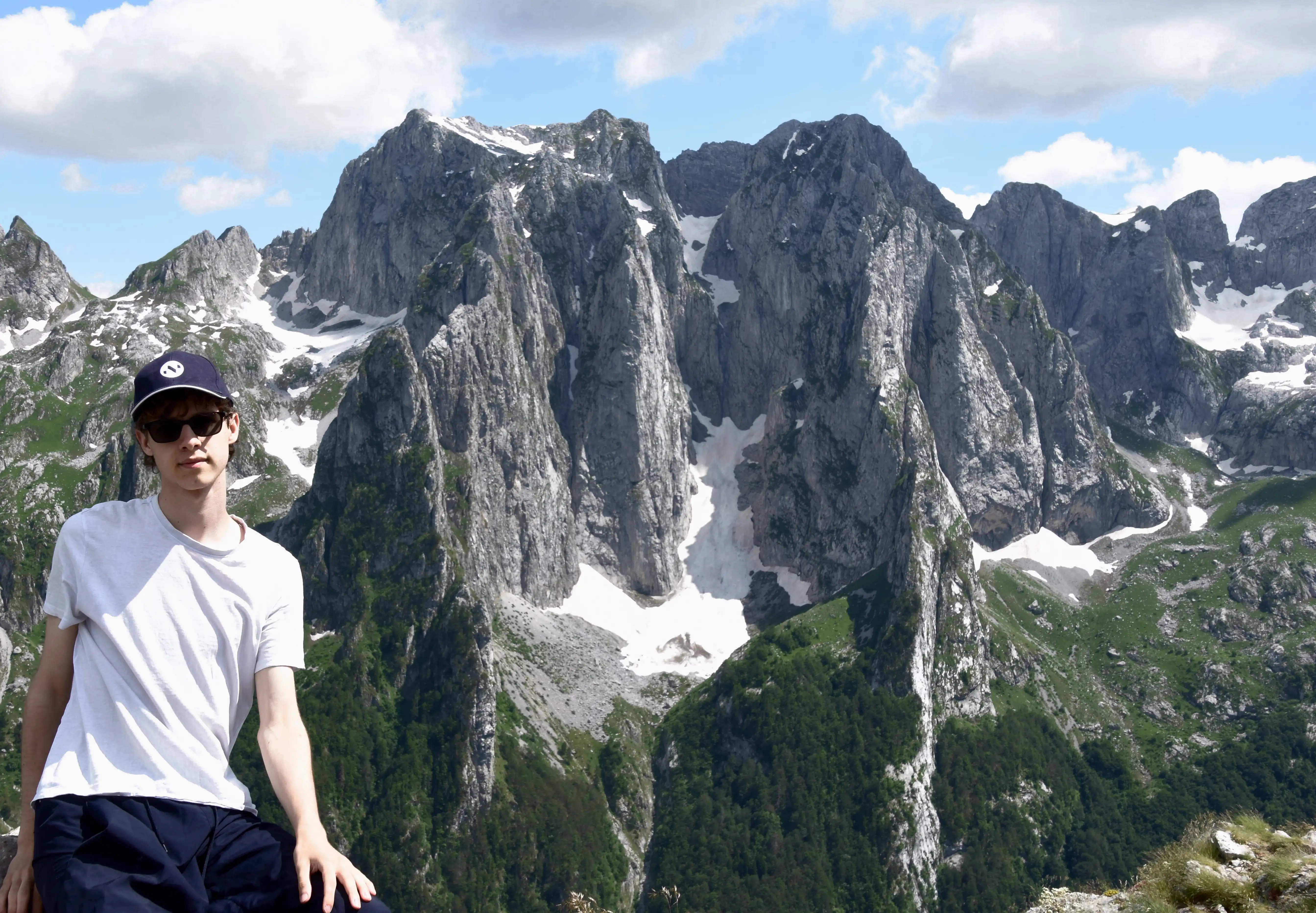
The Karanfili peaks behind me
We drove through Gusinje on the way back, stopping in the local IDEA to stock up on snacks and drinks. It is a remarkably lovely little town, with a local mosque and a pedestrianised town square.
Ethno Katun ROSI
We cannot recommend Ethno Katun Rosi enough. It is run by a big family, and they are incredibly kind and accommodating. The food is cheap and filling, and the breakfast is included and comes with eggs and pancakes! There are also quite a few stray cats and dogs hanging around the camp. While it is important to be careful (especially of rabies!) some are very friendly, including this puppy we called Mak (after the poppy seed bread, Mak pirog) for whom we bought some dog food for the duration of our stay.
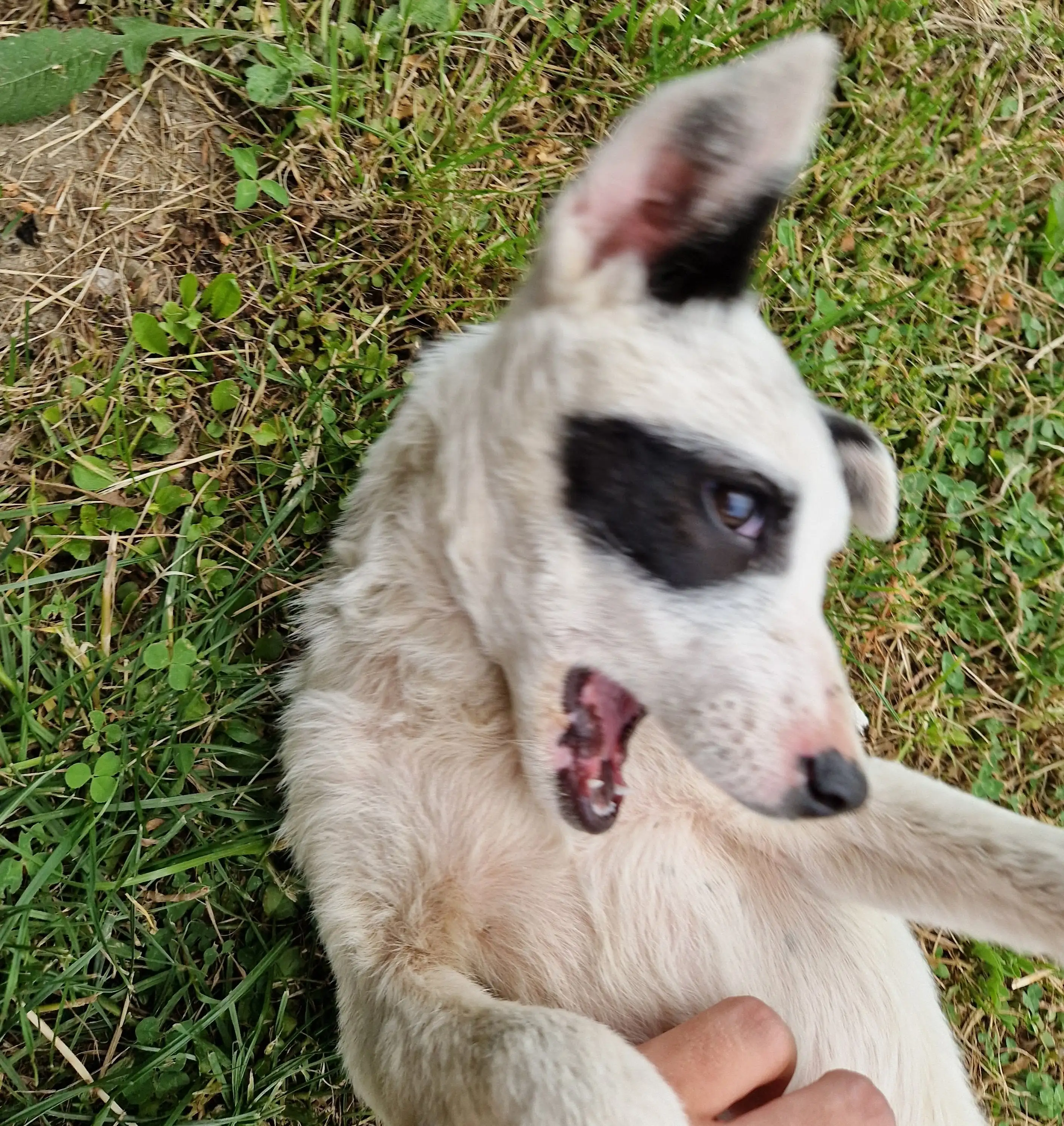
Mak the puppy!
Horse Riding
On a whim after seeing a video online, we decided to see if we could do some horse-riding in the Grebaje valley while we were here! Because we gave less than two days notice, I put out a post on the local Facebook and messaged a bunch of local companies to see who had space. I ended up in contact with Ergela Prokletije, a family-run camp (Eco Jasavic on Google Maps) who offered a 2-hour ride for €60 each. While maybe a bit on the pricey side, we thought it was worth it and agreed to a 5pm sunset ride.
We were complete beginners, but the horses were well-trained and confident. Riding through the alpine meadows on horseback was an unforgettable experience and absolutely worth it in our opinion!
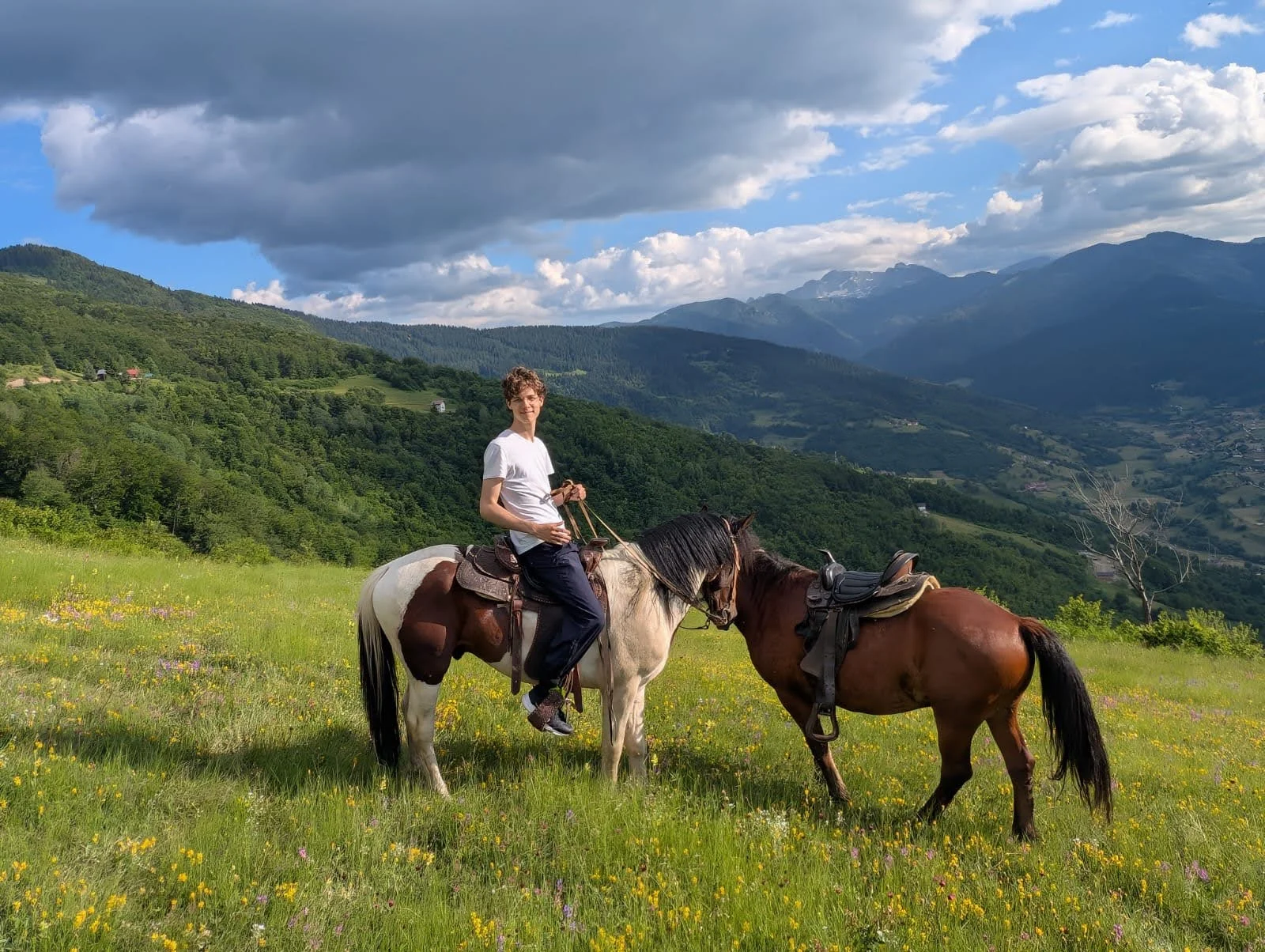
The view from horseback!
We were very sad to leave Mak the dog, but we had to hit the road on Saturday morning after a lovely breakfast and coffee.
Skadar Lake
A three-hour drive south through Podgorica and another stop for fuel, we arrived by the side of Lake Skadar! We were greeted at our apartment, Plamenatz Studio Apartments, by a very friendly family, two shots of alcohol and a lovely air-conditioned room.
The apartment offers a dinner menu cooked by the mother, and we had several courses, including trout and chicken, soups, bread, and even homemade wine brewed by the son.
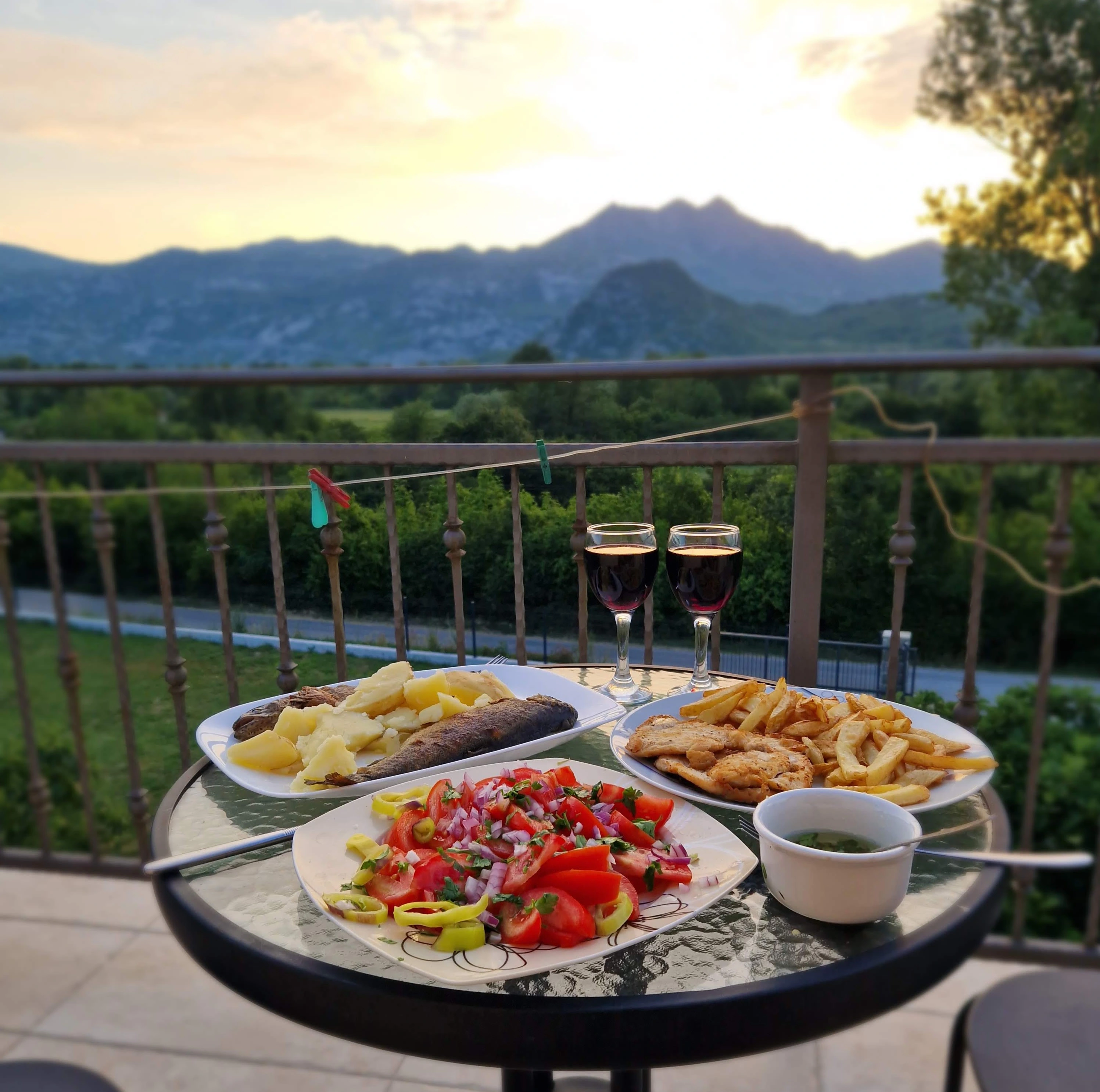 The main course in the sunset
Our schedule for Skadar Lake was relax, relax, and relax. We’d spent two weeks hiking and some resting was on the agenda.
Boat tour
The only thing we had planned for Skadar was a boat tour on the lake, which we organised through our host family.
Ignore the people coming up to you as you drive into Virpazar. They are con artists, they will rinse you for an overpriced boat tour. They force you into the car park, claim it is ‘private property’ (it is not, it is a free car park) and tell you that if you don’t buy their boat tour, they will damage your car. Instead, book through the many other, cheaper boat operators by the water, or online.
We went on the lake in a private wooden boat, captained by a very competent English-speaking Montenegrin 18-year old. The tour was a romantic and relaxing 2-hour exploration of the lily-pad covered lake, interspersed with historic facts about the 13th-century monastery, or the abandoned ruin of Grmozur Fortress on the lake. Nicknamed the Montenegrin Alcatraz, it was an island prison built by the Ottomans, and to prevent escape it was populated only by inmates who did not know how to swim.
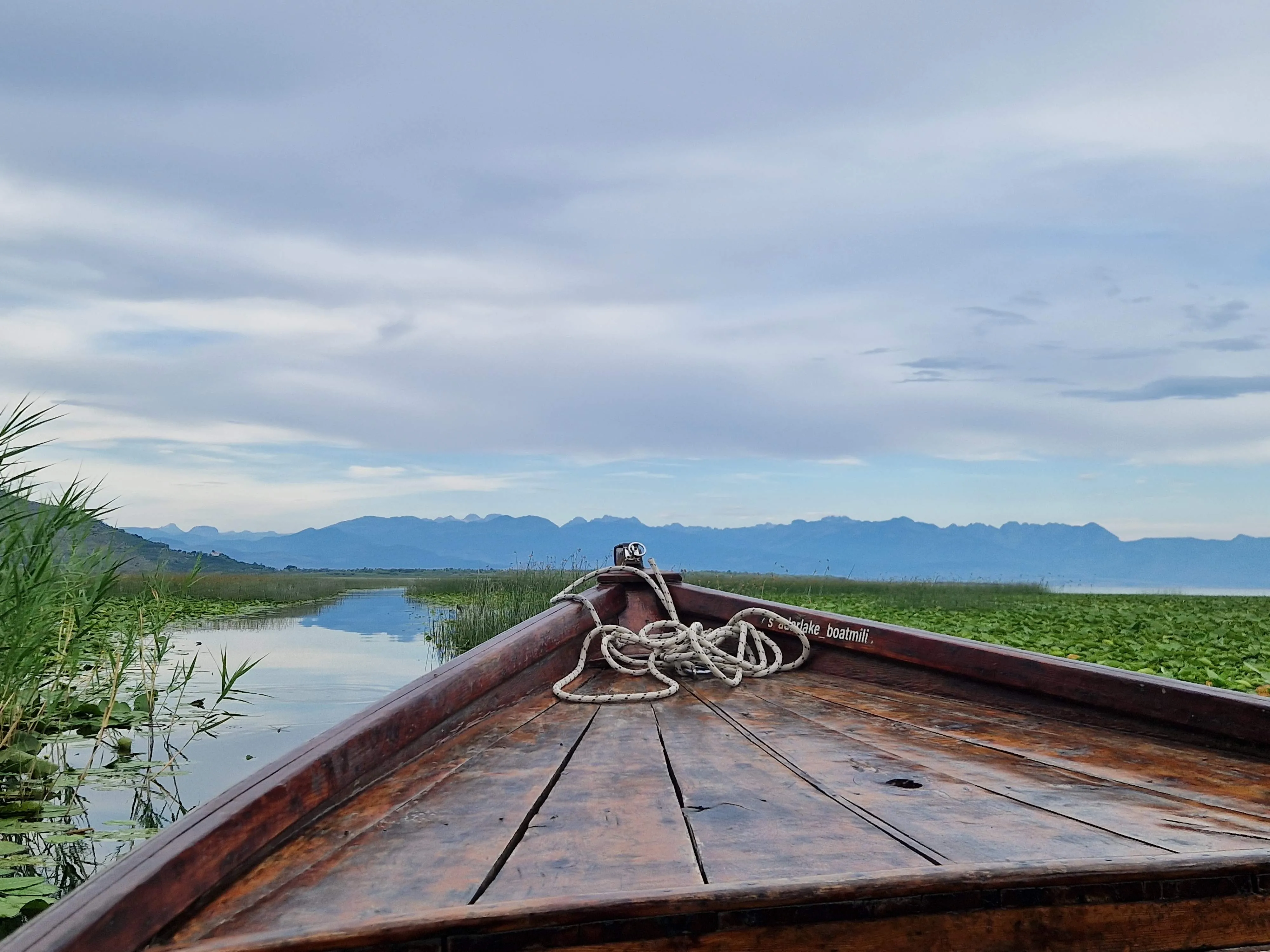 Lily pads on Lake Skadar
We woke up on the last day, reluctantly stuffed our belongings into our check-in bag, packed it into the hire car, and left our last Montenegrin beds! We made a last pit stop at VOLI for a hot lunch, and then drove to Podgorica Airport to return our Toyota to Marko of Terrae-Car scratch-free. We made a dash across the hot car park to the air conditioned terminal, and checked our bag into the Ryanair return flight home!
Landing in London was a deserved ending to this incredible holiday. Note that unlike usual, we landed in 35-degree heat, as London is suffering from a heatwave. Bay of Kotor here we come again!
Overall
We were very sad to leave Montenegro, as we had become quite attached to VOLIs and the local customs. It is rare to find a destination where you can transition from a coastal Mediterranean paradise to alpine wilderness in a single afternoon. What makes Montenegro so special is its rawness - exploring abandoned fortresses, finding stray puppies, and booking boat tours through local families. It requires adaptability and a wallet full of cash, but for a budget-friendly destination, it delivers a world-class adventure. It was a bittersweet goodbye to a country that had given us the best trip of our lives.
Know Before You Go
-
Rent a small car: The mountain roads (especially the Durmitor Ring) are incredibly narrow. Also, prepare for full-service petrol stations - just say Puno, molim for a full tank.
-
Cash is king: While touristy spots and major supermarkets take card, the mountains and anything more local runs entirely on cash. Keep a healthy stack of Euros and visit ATMs whenever you’re in a city.
-
Pack for two climates: The sweltering heat of the coast and the wind chill of the mountains call for two entirely different wardrobes - pack smartly to combine these outfits. We visited in June, so the temperature by the sea was in the warm high-twenties, which dropped to the mid-teens up in the highest peaks. I’d recommend bringing shorts and a t-shirt for the coastal regions, and hiking trousers and a thin raincoat for the freezing wind-chill higher up!
-
Buy the Annual Parks Pass: At €13.50 (at the time of writing) this pass is well worth it.
-
Suncream and bug spray: The alpine valleys are stunning, but the UV level is high and the mosquitos are out.